Wellness Traditions
Onsen and Ryokan: A First-Timer's Guide to Japanese Spa Etiquette
Japan's bathing culture is one of the most rewarding in the world, and one of the most rule-bound. What to expect, what to do, and the four mistakes first-timers make.
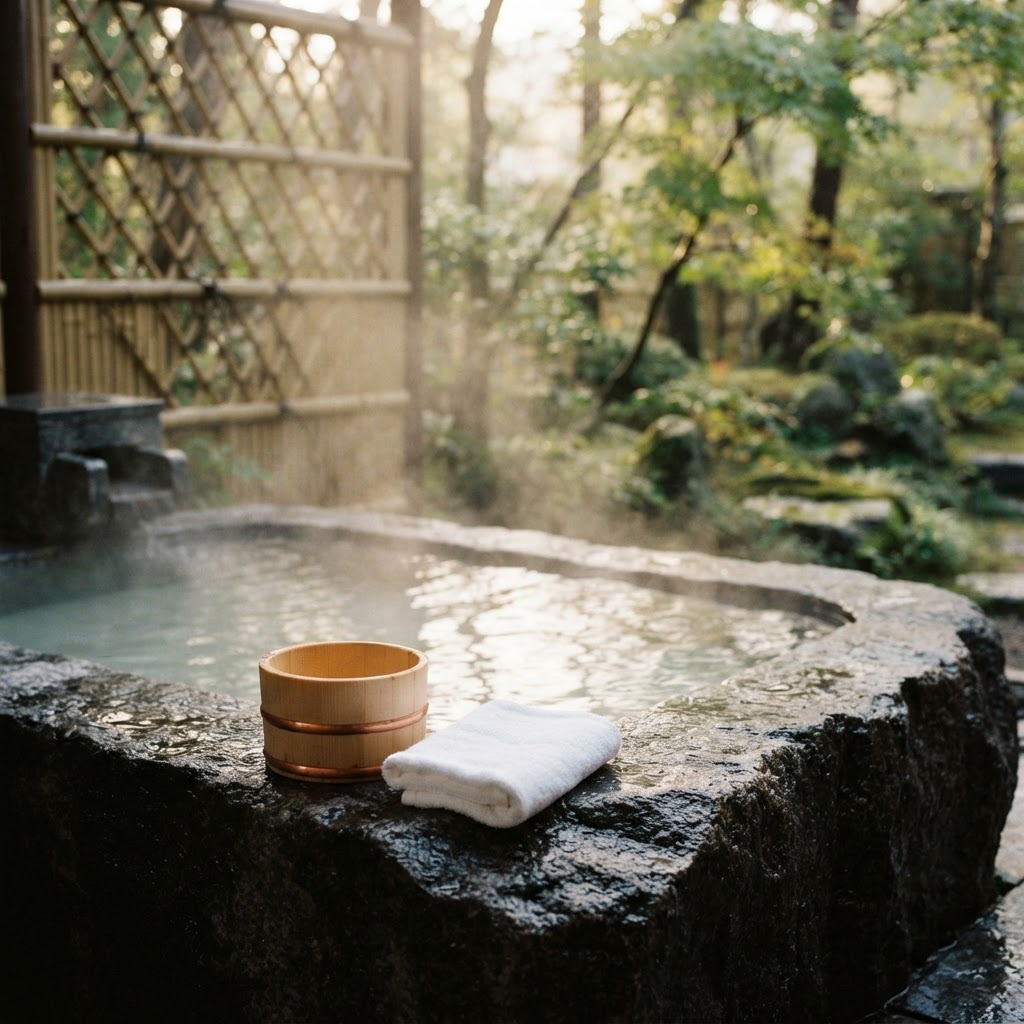
A Japanese onsen is not a spa in the European sense. There is no robe, no treatment menu at the door, no therapist asking about pressure. There is hot mineral water, a washing station, and a set of expectations that have been refined over centuries. Understanding them is the difference between an awkward twenty minutes and one of the most memorable hours of a trip. The bathing sequence You wash before you enter. Always, and thoroughly, seated at a low shower station with a hand-held shower and a small stool. The bath itself is for soaking, not cleaning, and soap never goes in the water. Enter slowly. The water is hotter than most western spas, often around 42 degrees, and the correct approach is to sit on the edge first, then lower yourself, then stay still. Five to ten minutes is a normal soak. Long enough to feel the heat reach your bones, short enough that you do not leave dizzy. Rinse off any residual soap before you get in, keep your hair out of the water if the bath permits it, and take a cool shower or sit in the shade between soaks. Two or three rounds is typical and is what the rhythm of the room is built around. The four things first-timers get wrong Swimwear. In most traditional onsen, none. Bathing suits are common at mixed-gender and family-oriented resorts, and some hotels loan them, but at a conventional single-sex bath the expectation is bare. Check before you go, not at the door. Towels. The small towel stays out of the water. It goes on your head, on the poolside, or folded on the edge, never in the bath. Noise. Conversation is quiet or absent. The atmosphere is closer to a library than a swimming pool. Tattoos. Still restricted at a number of traditional baths, though the picture is changing and many hotels now offer private or covered options. Ask in advance and you will usually be accommodated discreetly. The ryokan rhythm The bath is one part of a longer sequence. Arrive mid-afternoon, change into the yukata provided, take a bath before dinner, eat a kaiseki meal that runs to many small courses, sleep on futon bedding, and bathe again in the morning, ideally at first light when the water is still and the room is empty. That morning bath is the part returning guests talk about. It is also the part most first-timers sleep through. Practical notes Hydrate more than feels necessary. Remove jewellery, which reacts with sulphur. If you have a heart condition or are pregnant, use the cooler baths and keep sessions brief. And leave your phone in the changing room: nearly every onsen prohibits photography in the bathing area, and the rule is enforced politely but firmly. None of this is difficult. It is simply a different grammar, and once you know it, the quiet makes complete sense.